|
|
|
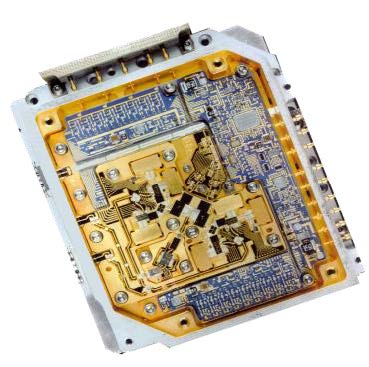
tgreen@tjgreenllc's blogMicrowave Packaging Technology PDC IMAPS Metro Show April 5th Long IslandMon, 03/12/2012 - 12:52 — tgreen@tjgreenllcFull Day Symposium and Vendor Night OVER 50 TOP VENDORS AND SUPPLIERS WILL BE REPRESENTED April 5, 2012 At the Holiday Inn Ronkonkoma Schedule 7:30-4:30 Professional Development Course 1 1:00 PM-4:00 PM Professional Development Course 2 There is a charge to attend a PDC
7:30-4:30 Microwave Packaging Technology
Course Leader: Tom Green, TJ Green
Full day symposium Vender
Logistics
Holiday Inn
3845 Veterans ASK FOR THE IMAPS RATE Registration Email: metroimaps@optonline.net
Phone: Steve Lehnert (650)
Hermetic Sealing and Testing of Small Volume MEMS PackagesThu, 01/26/2012 - 00:23 — tgreen@tjgreenllcIMAPS Device Packaging Conference
Scottsdale AZ March 5th 2012 Course Description:
Who Should Attend? Space and Military Standards for Hybrids and RF Microwave ModulesFri, 01/06/2012 - 14:57 — tgreen@tjgreenllc
Program Description
The US military specifications for the manufacture of hybrids and RF microwave modules can be confusing and overwhelming to the inexperienced user. This two part webinar is designed to explain in a logical manner the military quality and manufacturing specifications for building custom hybrids for aerospace applications. A comparison is also drawn between the US and European Space Agency requirements.
Check out the IMAPS Webinar Link at for latest detials and registration information
Non Hermetic Packaging Technology for Reliable MicroelectronicsFri, 01/06/2012 - 14:37 — tgreen@tjgreenllcThe program has finally come together and we're expecting a decent crowd to discuss the latest developments in this important technology area. Here is a lnk to the final program IMAPS ATC NON_HERMETIC PACKAGING TECHNOLOGY FOR RELIABLE MICROELECTRONICS NASA will be giving the Keynote address along with updating us on the status of the "CLass Y" non-hermetic qualification program program for space applications It's nice in Florida this time of year...bring your sticks and get out on the golf course Hope to see you there!
Hermetic vs. 'Near Hermetic' Packaging - a Technical ReviewThu, 09/22/2011 - 21:33 — tgreen@tjgreenllcTJ Green Associates posts white paper describing
Hermetic vs. 'Near Hermetic' Packaging - a Technical Review
Hermetic cavity packages have long been the standard for military and space applications. On one hand the hermeticity specs are getting tighter, on the other hand the question that is now being poised is; Do I need to be hermetic? "Near hermetic" or "non-hermetic" packages hold the promise of reliability at a greatly reduced cost ... maybe ..
Click here to download a 10 page white paper authored by Tom Green on this important subject Free Download Upcoming Advanced Technology Conference focused on “Near” or “Non” Hermetics…. take your pick!……..Thu, 09/22/2011 - 21:31 — tgreen@tjgreenllcHermetic packaging has long provided the required protection from dust, dirt, contamination, moisture, and other threats to operating reliability for sensitive electronic devices. Hermetic packages are expensive and technical and manufacturing resources for them are diminishing in availability. Designers are searching for ways to lower cost, reduce weight and increase performance by looking to design-in alternate material sets including engineered plastics such as LCP and robust barriers offering enhanced protection from moisture permeation. There are a variety of materials and approaches that hold the promise of enhancing reliability of non-hermetics while reducing cost. The problem essentially becomes one of minimizing moisture diffusion through the bulk of package materials and at package/lead interfaces. Packages made from polymeric materials, or robust barrier coatings, as opposed to traditional hermetic seals (i.e. metal, ceramics, eutectic etc.) require a different approach from a reliability testing and qualification standpoint.
Packaging technologies and materials that are not hermetic, and that offer reliability without hermeticity, are available to the industry. These approaches include flip-chip laminate designs or cavity packages made of materials that provide physical protection for sealed devices, but which are not positively absolute barriers to moisture. The conference proposes to bring together providers of non-hermetic concepts, products, and materials, with package designers, manufacturing and assembly production engineers, quality and reliability managers, and program managers to explore and explain enhanced moisture resistance packaging and provide technical guidance to those capabilities for potential users of such packages especially, for high reliability environments with extended service life expectations Hermeticity: Frequently Asked QuestionsThu, 09/22/2011 - 21:30 — tgreen@tjgreenllc1. What is hermeticity?
Hermeticity is a term that simply describes a package with an air tight seal. The dictionary defines “hermetic” as a seal that is gas tight or impervious to gas flow. In the context of microelectronics it implies an airtight seal that will keep moisture and other harmful gases from penetrating the sealed package. There are military specifications for microelectronic packages which require a minimum air leak rate for a given package volume. Only packages made from glasses, metals and ceramics are considered hermetic. But even these types of packages, given a long enough time period will allow moisture and other gases into to the cavity. Nothing is ever completely hermetic.
2. Why does my package need to be hermetic?
It may not. The need for a hermetic package depends upon the susceptibility of the enclosed components to moisture and other harmful gases that may leak into the package. Another important consideration is the field environmental conditions, the operating characteristics of the part and the expected service life. Historically, hermeticity has always been a requirement for the military, medical and telecommunications industry. However, material and process improvements at the device level, reduced levels of contamination and the use of moisture getters compels one to question the need and added cost for a hermetic package for each new package design.
3. Why is moisture a bad thing?
Generally speaking moisture and microelectronics don't mix. Moisture droplets can form inside the package cavity as the part is cooled below the dew point temperature. Condensed moisture inside a package has the potential to negatively affect the performance and reliability of the component. Immediate electrical problems may occur such as leakage across pins, a change in transmission line impedance in a RF circuit, or light scattering in a photonic component due to water droplets at the fiber to chip interface. Corrosion or other material failure mechanisms are also a concern and may shorten the expected lifetime of the component. If enough surface water combines with ionic contamination, such as sodium or chlorine, corrosion may take place at the exposed aluminum metal at the bond pad or attack thin film resistor networks. Intermittently powered devices are prone to moisture related failures in the event of condensation prior to power up, which is exactly the problem that occurs in a long term storage scenario. Other problems caused by moisture inside a package nclude: damage to the doped layers on a silicon chip if there are pinholes in the surface aestivation, arcing in a high voltage device and "stiction" in a MEMS (MicroElectroMechanicalSystem) component. Moisture related problems over the years have been well chronicled in technical journals and discussed at length at conferences such as the Reliability Physics Symposium.
4. How do you measure hermeticity?
There are many ways to measure hermeticity of a microelectronic package. The most common method used to measure "fine leaks" is to force a helium tracer gas into the package and measure the resulting helium leak rate using a mass spectrometer tuned to the helium peak. Knowing the helium leak rate one can calculate an equivalent air leak rate. Other techniques such as Optical Leak Testing (OLT) have gained acceptance in recent years, especially in the photonics community. Bubble test, dye penetrant and weight gain test are all used to measure "gross leakers". These test methods are described at length in MIL-STD-883 TM 1014 (Seal). See attached "Practical Guide to TM 1014" for a more detailed explanation of each technique.
5. What drives the requirement for hermeticity in a Military/High Rel application?
Microelectronic components used in military, space and implantable medical devices (e.g. pacemakers), along with most optoelectronic components for Telecom applications, and MEMS devices have historically all required a hermetic package, both from a practical perspective and as a contractual specification requirement. Today, microelectronic components built on Qualified Manufacturing Lines (QML) intended for Military/Space are governed by Mil-PRF- 38535 "Monolithic Microcircuits" or Mil-PRF-38534 "Hybrid Microcircuits Specification" and other similar specs. Each of these documents calls out 100% Screen Testing per MIL-STD- 883 TM1014. The purpose of TM 1014 is to verify a hermetic seal and prevent moisture from entering the package. The Telecommunications industry is governed by the Telcordia specifications, which mandates the same hermeticity requirement. Medical implants are covered by FDA requirements, these also mirror those found in the Mil specs.
6. What is the maximum level of moisture allowed inside a hermetic part?
The maximum moisture content allowed inside a hermetic package is 5000 PPM or .5% water vapor. The rationale being that at 5,000 PPM the water vapor dew point is below the freezing mark, and therefore any moisture that would condense inside the package would be in the form of ice crystals and not be available for corrosion processes. Also, at the time the spec was originally written 5000 PPM represented the minimum repeatable detection limits of the equipment available. The test for measuring moisture inside a package is defined in MIL-STD-883 TM 1018 (Internal Water Vapor Content) or RGA (Residual Gas Analysis). In this test the package is punctured by a small pin and all the internal gas is captured and analyzed. The hermeticity requirement and the 5,000 PPM spec limit go hand in hand. The idea is to start with a dry package and keep it that way for the entire lifetime of the part. A dry part is a reliable part, or so the theory goes.
7. Why not use a plastic package, it's cheaper?
Good question and there are many plastic parts in use in high rel applications. These are generally molded or potted components are also known as PEMS (Plastic Encapsulated Microcircuits) and fall under the category of COTS (Commercial of the Shelf Technology). In most cases where plastic parts are used in lieu of hermetic for high rel applications the components have been screened, tested and qualified for the particular application. Leak testing per TM 1014 and RGA limits don't apply to these types of components.
8. What is meant by the term "near-hermetic" or "quasi- hermetic"?
Quasi is a word that defines "having some, but not all the features of the original". Quasi or near hermetic packages are typically made with advanced polymers with low moisture permeability such as PTFE ( better known as Teflon) or LCP (Liquid Crystal Polymers). A hermetic can with an epoxy lid seal is considered a quasi hermetic package. Cavity style packages made from Teflon or LCP would be considered a near hermetic.
9. How would I test a "near hermetic" package?
Hermeticity testing as defined per MIL-STD-883 TM1014 and the associated 5000 PPM RGA requirement were never intended for "near hermetic" organic based packages. The mechanism for ingress of moisture and contaminants into organic-based materials is markedly different than that of a hermetic package made from inorganic materials. Herein lies the dilemma the industry is faced with today. There are no clearly defined test methods and procedures similar to TM 1014 and TM 1018 for testing "near hermetic" packages. Moisture sensors placed inside the package cavity located along side a working device can provide real time data regarding moisture ingress into and out of the plastic enclosure. With this understanding and "in-situ" testing approach new theoretical models can be developed and applied to the problem of assessing moisture ingress in "near hermetic" packages. |
| ||